2026-10-07 · Mark Bennett
Steel Piers vs Concrete Piers for Oklahoma Foundation Repair
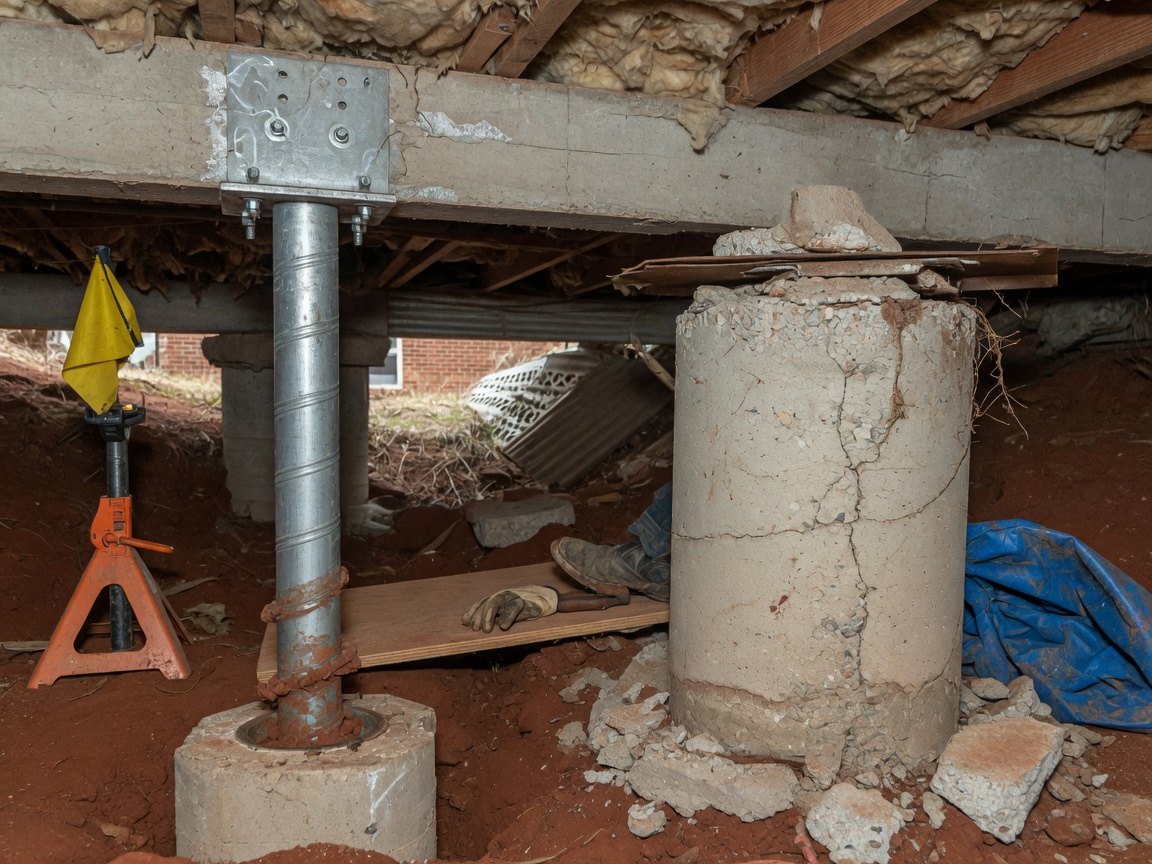
Steel piers reach deeper stable strata and resist the repeated moisture cycles that drive foundation movement across Oklahoma County, while concrete piers frequently stop in active clay zones and develop cracks within 8–12 years. In neighborhoods such as Midtown, The Village, and Moore, homes built before 1970 sit on pier-and-beam systems that now require targeted underpinning when seasonal rains and droughts shift the upper 8–12 feet of soil. Steel piers can be driven 20–35 feet to reach shale or sandstone, delivering 40–60 ton capacities per pier in a single day. Concrete piers, limited by excavation depth and curing time, rarely exceed 12–15 feet and lose strength when the surrounding clay expands after a thunderstorm.
Soil and Weather Realities in Oklahoma County
Oklahoma County clay soils swell and shrink with every warm humid summer followed by a cold winter front. Frequent severe thunderstorms drop 2–4 inches of rain in hours, pushing perched water tables upward and lifting footings that rest only in the top 10 feet. Homes along Automobile Alley and Deep Deuce sit on the same expansive strata as newer subdivisions in Edmond and Norman, yet older stock in Bricktown and Capitol Hill shows more settlement because original concrete piers were never driven past the active zone. Steel piers bypass this layer entirely, seating into competent material that remains stable even when surface moisture fluctuates 15–20 percent seasonally. Concrete piers installed in the same soils often experience 1–2 inches of differential movement within five years of a wet spring.
Steel Piers Installation Steps for Local Homes
Technicians begin by excavating 3-foot-square access pits at each pier location, typically under sagging floor joists in Warr Acres or Bethany crawl spaces. Hydraulic rams drive 3-inch steel pipe sections in 4-foot increments until torque readings exceed 4,000 foot-pounds, usually at 22–30 feet. Once refusal is reached, a steel bracket is welded and bolted to the beam, then the pier is load-tested to 150 percent of design capacity before backfill. The process allows crews to work year-round because steel does not require curing time, an advantage when cold fronts arrive in January. Because the method disturbs minimal soil, it pairs well with later crawl space vapor barrier installation once the foundation is stabilized.
Concrete Piers Performance Limits in Thunderstorm Climate
Concrete piers rely on hand-dug or drilled shafts that stop when groundwater or cave-in risk appears, commonly 10–14 feet in Midwest City and Del City lots. After placement, the concrete must cure 28 days before full load, leaving the structure vulnerable during the next heavy rain. When clay heaves against the pier shaft, lateral pressure cracks the concrete at the cold joint between footing and stem. In Stockyards City and Capitol Hill homes, inspectors routinely find ½-inch cracks and ¾-inch settlement after only one wet–dry cycle. Because concrete cannot be lengthened once poured, additional piers must be added later, increasing total project scope.
Cost and Lifespan Comparison
Steel pier jobs in Oklahoma City average $4,200–$7,800 for six to ten piers, with each pier carrying a 25-year transferable warranty against material failure. Concrete pier estimates run $3,100–$5,400 for the same number but require follow-up work within 8–12 years in 60 percent of Oklahoma County cases. Homeowners in Moore and Norman who chose steel 15 years ago report zero additional settlement even after the 2019 and 2023 thunderstorm seasons. Concrete installations from the same era often need supplemental helical or steel piers today. The initial savings disappear once excavation, concrete removal, and re-leveling costs are added.
When to Choose Each System on Oklahoma Foundation Repair Projects
Steel piers suit homes showing 1 inch or more of differential settlement near the Oklahoma State Capitol or Remington Park where soil borings confirm deep active clay. Concrete piers remain viable only for light, single-story additions on stable fill in newer Edmond subdivisions where the active zone is thinner. In every case, pairing foundation work with pier and beam foundation repair prevents secondary joist damage. Readers facing ongoing settlement should review the documented patterns in Foundation Settlement in Oklahoma: Signs, Causes and Repair Costs before scheduling an inspection at 7220 S Western Ave.